How Adaptive Cycle Engines Differ From Traditional Turbofans
Adaptive Cycle Engines and Traditional Turbofan Engines are both types of jet engines used in aircraft, but they have distinct differences in design, functionality, and application.
Traditional Turbofan Engines
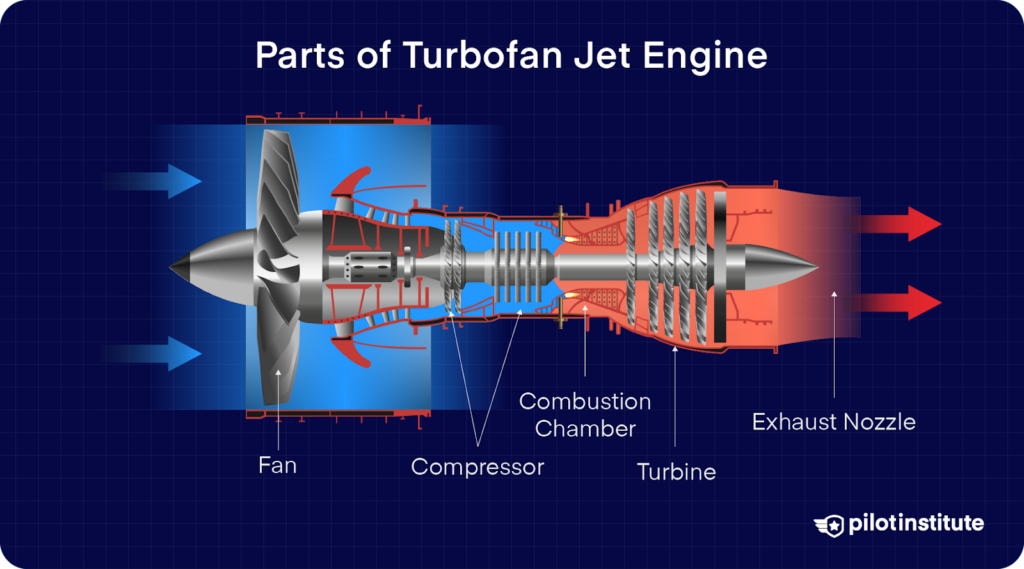
Traditional Turbofan Engines are the most common type of jet engine used in commercial and military aircraft. They consist of a fan at the front, which accelerates a large portion of the air that enters the engine, producing a significant portion of the engine’s thrust. The air that passes through the fan is then accelerated by the core engine, which consists of a compressor, combustion chamber, turbine, and nozzle. The core engine produces a smaller portion of the engine’s thrust.
The Traditional Turbofan Engine has a fixed architecture, with a single, fixed bypass ratio (the ratio of air that bypasses the core engine to air that passes through the core). This means that the engine is optimized for a specific flight regime, usually cruise. While efficient at cruise, traditional turbofans can be less efficient during other phases of flight, such as takeoff, climb, or descent.
Adaptive Cycle Engines
Adaptive Cycle Engines, also known as adaptive turbofans or variable cycle engines, are a new generation of engines that can change their architecture and bypass ratio in response to changing flight conditions. This allows them to optimize performance across a wider range of flight regimes.
The Adaptive Cycle Engine has multiple ducts and variable geometry components, which enable it to change its bypass ratio and engine architecture. This is achieved through the use of:
1. Variable Bypass Ratio: The engine can change its bypass ratio in response to changing flight conditions. During takeoff and climb, the engine can operate with a lower bypass ratio, which provides more thrust. At cruise, the engine can switch to a higher bypass ratio, which improves fuel efficiency.
2. Multiple Ducts: The engine has multiple ducts that allow air to flow through the engine in different ways, depending on the flight regime. This enables the engine to adapt its architecture and optimize performance.
3. Variable Geometry Components: The engine has variable geometry components, such as variable pitch fans, variable area nozzles, and variable geometry turbines. These components allow the engine to change its operating characteristics in response to changing flight conditions.
The Key Differences Between Adaptive Cycle Engines and Traditional Turbofan Engines
1. Flexibility: Adaptive cycle engines can change their architecture and bypass ratio in response to changing flight conditions, while traditional turbofans have a fixed architecture.
2. Efficiency: Adaptive cycle engines can optimize efficiency across a wider range of flight regimes, while traditional turbofans are optimized for a specific flight regime.
3. Thrust: Adaptive cycle engines can provide more thrust during takeoff and climb, while traditional turbofans may be optimized for cruise.
4. Complexity: Adaptive cycle engines are more complex than traditional turbofans, with multiple ducts and variable geometry components.
The Benefits of Adaptive Cycle Engines Include:
1. Improved Fuel Efficiency: Adaptive cycle engines can optimize fuel efficiency across a wider range of flight regimes.
2. Increased Thrust: Adaptive cycle engines can provide more thrust during takeoff and climb.
3. Enhanced Operational Flexibility: Adaptive cycle engines can adapt to changing flight conditions, making them more suitable for a variety of missions.
The Challenges Associated with Adaptive Cycle Engines
1. Increased Complexity: Adaptive cycle engines are more complex than traditional turbofans, which can increase development and maintenance costs.
2. Higher Development Risk: Adaptive Cycle Engines require significant advances in materials, aerodynamics, and control systems, which can increase development risk.
Adaptive Cycle Engines are still in the development phase, with several engine programs underway, including the US Air Force’s Adaptive Engine Technology (AET) program and the US Navy’s Adaptive Engine program. These engines are expected to enter service in the mid-to-late 2020s.
In summary, Adaptive Cycle Engines offer improved fuel efficiency, increased thrust, and enhanced operational flexibility compared to traditional turbofan engines. However, they are more complex and have higher development risk. As the technology matures, Adaptive Cycle Engines are expected to play a significant role in future aircraft propulsion systems.


Tony is a Aviation, Aerospace and Airplane Geek. He specializes in Aeronautics, Avionics, Military Air Assets, Airliners and Airlines