Attack Submarines vs Ballistic Missile Submarines: How they Differ
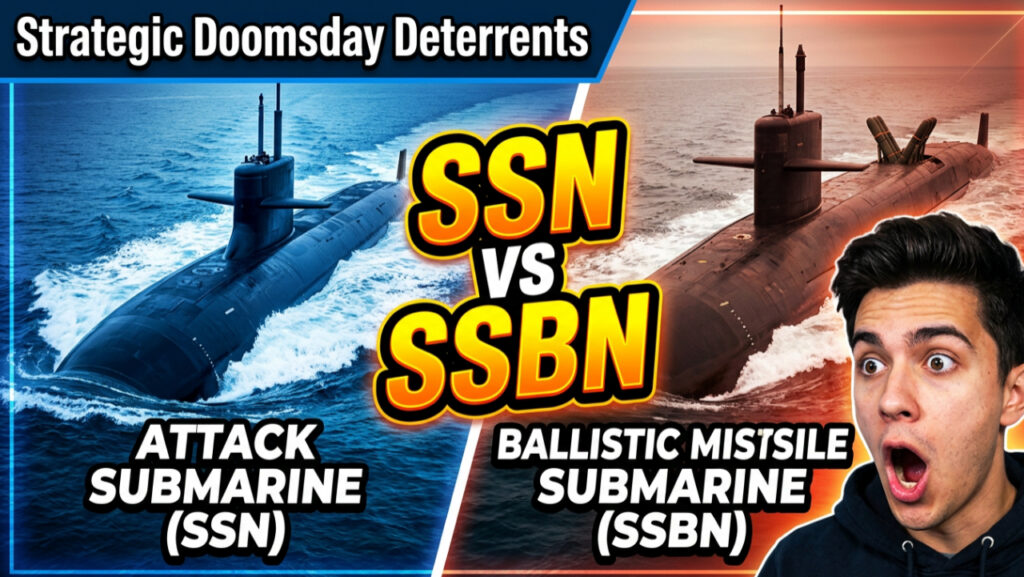
Attack submarines (SSN) and ballistic missile submarines (SSBN or SSB) are two types of nuclear-powered submarines that serve distinct purposes in a nation’s naval fleet. While both types of submarines are designed for underwater operations, they differ significantly in their design, capabilities, and roles.
Attack submarines (SSN) are designed for anti-submarine warfare (ASW), anti-surface warfare (ASuW), and intelligence gathering. They are typically smaller and more maneuverable than ballistic missile submarines, with a focus on speed and stealth. SSNs usually have a single hull design, which provides a smaller acoustic signature, making them harder to detect. They are equipped with a variety of sensors, including sonar arrays, and have a large number of tubes for launching torpedoes, anti-ship missiles, and land-attack missiles.
In contrast, ballistic missile submarines, (SSBN or SSB) are designed to carry and launch intercontinental ballistic missiles (ICBMs). They have a larger hull diameter to accommodate the missile tubes and are often longer than SSNs to provide additional buoyancy and stability. SSBNs typically have a double hull design, which provides additional protection against mine and torpedo attacks. The missile tubes are usually located in the center of the submarine, and the vessel has a more limited suite of defensive systems.
Propulsion and Performance
Both SSNs and SSBNs are nuclear-powered, but their propulsion systems are optimized for different performance characteristics. SSNs are designed for high-speed operations, with propulsion systems that can generate high power outputs. They often have a more advanced reactor design, which allows for a higher power density and faster acceleration.
SSBNs, on the other hand, prioritize endurance and stealth over speed. Their propulsion systems are optimized for quiet operation and efficient cruising at slower speeds. This allows them to remain undetected while on patrol and conserve energy for extended periods.
Armament and Capabilities
The most obvious difference between SSNs and SSBNs is their armament. SSNs are equipped with:
Torpedoes such as Mk-48 for anti-submarine warfare, Anti-ship missiles such as Harpoon, for surface warfare, Land-attack missiles such as the Tomahawk for strike missions and Mines and other specialized payloads.
In contrast, SSBNs are equipped with Intercontinental ballistic missiles (ICBMs, such as Trident for strategic nuclear deterrence, limited defensive systems, such as torpedoes or countermeasures.
Mission and Operational Concepts
The operational concepts for SSNs and SSBNs differ significantly
SSNs operate in a variety of roles, including Anti-submarine warfare such as patrolling specific areas and escorting convoys; and in anti-surface warfare such as in patrolling coastal areas and escorting friendly vessels.
They are also involved in Intelligence gathering by conducting surveillance and intercepting communications.
Ballistic missile submarines also carry out Special operations such as inserting or removing special forces and conducting reconnaissance missions.
SSBNs operate primarily in a strategic deterrent role by conducting patrols in designated areas, Maintaining a high degree of readiness for missile launches and providing a secure second-strike capability in the event of a nuclear conflict.
Other Key Differences
Other notable differences between SSNs and SSBNs include:
1. Crew Size and Composition: SSBNs typically have a larger crew due to the need for specialized missile handling and maintenance personnel.
2. Support Systems: SSBNs often have more extensive life support systems, as they need to sustain the crew for extended periods at sea.
3. Communications: SSBNs have more secure and specialized communication systems to facilitate communication with national command authorities and ensure the integrity of the nuclear command and control chain.
In summary, attack submarines (SSN) and ballistic missile submarines (SSBN) differ significantly in their design, capabilities, and roles. While SSNs are optimized for anti-submarine warfare, anti-surface warfare, and intelligence gathering, SSBNs are designed for strategic nuclear deterrence and equipped with intercontinental ballistic missiles.


Tony is a Aviation, Aerospace and Airplane Geek. He specializes in Aeronautics, Avionics, Military Air Assets, Airliners and Airlines