Why the B-52 Stratofortress is Impossible to Replace
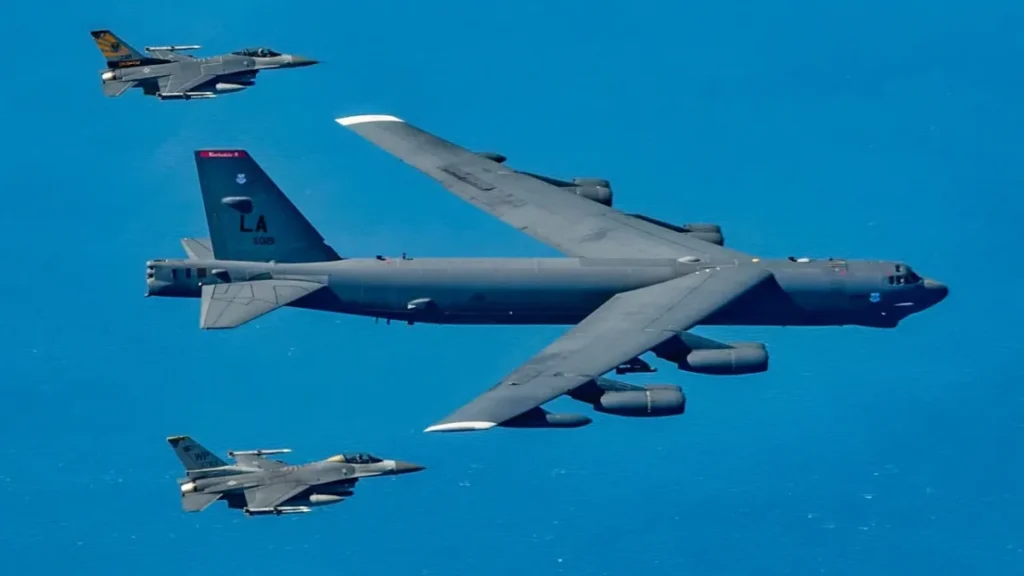
The B-52 Stratofortress has been a cornerstone of the US Air Force’s bomber fleet for over six decades. Several factors contribute to its enduring value and the challenges of replacing it:
1. Cost and funding: Developing a new bomber is extremely costly. The B-2 Spirit and B-21 Raider bombers are examples of expensive projects, with estimated costs per unit ranging from hundreds of millions to billions of dollars. Finding the necessary funding for a new bomber program can be difficult.
2. Operational flexibility and capabilities: The B-52 has been continuously upgraded and modified, allowing it to maintain a high level of operational effectiveness. Its ability to carry a wide range of payloads, including conventional and nuclear weapons, makes it a versatile asset.
3. Maintenance and Servicing: The B-52 has a well-established maintenance and sustainment infrastructure. Its longevity has allowed the Air Force to refine and optimize maintenance procedures, making it more cost-effective to keep the aircraft flying.
4. Crew training and experience: The B-52 has been in service for so long that many of its crews have extensive experience operating the aircraft. Replacing it would require significant investments in training and simulation.
5. Nuclear deterrence role: As a nuclear-capable bomber, the B-52 plays a critical role in the US nuclear deterrent. Any replacement must also meet stringent nuclear certification and compliance requirements.
6. Technological advancements: While new bombers like the B-21 Raider are being developed, integrating emerging technologies, such as advanced stealth capabilities and modern electronics, into a new aircraft is complex and time-consuming.
7. Service life extension: The B-52’s service life has been extended multiple times, with some estimates suggesting it could remain in service until the 2050s or beyond.
Lets take a quick dive into the world of the B-52 Stratofortress.
The B-52 Stratofortress is a long-range, subsonic, jet-powered strategic bomber designed and built by Boeing for the United States Air Force. It is one of the most recognizable and iconic aircraft in the world, with a service history spanning over six decades.
The B-52 is a large, eight-engine aircraft with a distinctive design. It has a long, slender fuselage with a rounded nose and a tail section featuring a horizontal stabilizer and two vertical stabilizers. The aircraft has a wingspan of 56.4 meters and a length of 185 56.4 meters.
The B-52 has a high-mounted wing design, with the wing attached to the top of the fuselage. The wing is a swept-wing design, with a leading edge sweep angle of 35 degrees. The wing is also equipped with a series of flaps and spoilers to enhance lift and control during takeoff and landing.
The aircraft has a conventional landing gear system, with a nose gear and four main gear units. The main gear units are located in the inner wing sections and are equipped with dual-wheel bogies.
It is powered by eight Pratt & Whitney TF33-P-3 turbofan engines, which are mounted in four pods under the wings. Each engine produces 17,000 pounds of thrust, giving the aircraft a total thrust of 136,000 pounds. The engines are equipped with thrust reversers to enhance braking during landing.
This bomber has a comprehensive avionics suite, which includes:
1. Radar systems: The aircraft is equipped with a range of radar systems, including a Westinghouse APW-11 pulse-doppler radar and a General Electric ASR-9 radar.
2. Navigation systems: The B-52 has a range of navigation systems, including inertial navigation, GPS, and terrain-following radar.
3. Communication systems: The aircraft has a range of communication systems, including HF, VHF, and UHF radios.
The B-52 also has a sophisticated defensive system, which includes Radar warning receivers to detect and track enemy radar emissions and Chaff and flare dispensers to confuse and saturate enemy radar systems.
It is capable of carrying a wide range of payloads, including:
1. Nuclear bombs: The aircraft can carry nuclear bombs, including the B61 and B83.
2. Conventional bombs: The B-52 can carry a range of conventional bombs, including gravity bombs, cluster bombs, and precision-guided munitions.
3. Cruise missiles: The aircraft can carry cruise missiles, including the AGM-86B Air-Launched Cruise Missile (ALCM) and the Long-Range Anti-Ship Missile (LRASM).
The B-52 has a top speed of around 1,014 kilometers per hour and a range of over 14,160 kilometers. The aircraft has a ceiling of around 15,240 meters and can operate at altitudes as low as 152 meters.
The B-52 has undergone numerous upgrades and modernization programs over the years, including Engine upgrades where the aircraft’s engines have been upgraded to more efficient and powerful models.
It has also undergone Avionics upgrades. Here, the B-52’s avionics systems have been upgraded to more modern and capable systems. Structural upgrades have also been carried out to improve its durability and extend its service life.
There have been several variants of the B-52
These variants are:
1. The B-52A: The initial production model, which entered service in 1952.
2. The B-52B: An upgraded model with improved engines and avionics.
3. The B-52C: A model with a revised nose section and improved radar systems.
4. The B-52D: A model with a revised tail section and improved defensive systems.
5. The B-52E: A model with improved engines and avionics.
6. The B-52F: A model with improved engines and structural upgrades.
7. The B-52G: A model with improved engines, avionics, and defensive systems.
8. The B-52H: The current production model, which entered service in 1962.
The B-52 has a long and distinguished service history, with the aircraft having been used in a range of roles, including Strategic bombing where the B-52 was designed as a strategic bomber, and it has been used in this role throughout its service history. It has also been used in Conventional bombing campaigns.
The B-52 Stratofortress, B-2 Spirit, and B-1 Lancer are all strategic bombers used by the United States Air Force. Each aircraft has its own unique characteristics, advantages, and disadvantages.
Here are some advantages of the B-52 Stratofortress over the B-2 Spirit and B-1 Lancer:
Advantages of the B-52 Stratofortress over B-2 Spirit:
1. Cost and affordability: The B-52 is significantly cheaper to operate and maintain than the B-2. The B-2 has a much higher operating cost per hour, estimated to be around $50,000-$70,000 per hour, compared to the B-52’s estimated $15,000 to $20,000 per hour.
2. Payload capacity: The B-52 has a higher payload capacity than the B-2, with a maximum payload of around 43,000 pounds which is 19,500 kg compared to the B-2’s 40,000 pounds which is about 18,144 kg.
3. Endurance: The B-52 has a longer endurance than the B-2, with a maximum mission duration of around 20-24 hours compared to the B-2’s 12-16 hours.
4. Maintenance and logistics: The B-52 has a well-established maintenance and logistics infrastructure, making it easier to support and maintain.
Advantages of the B-52 Stratofortress over B-1 Lancer:
1. Range and endurance: The B-52 has a longer range and endurance than the B-1, with a maximum range of around 14,160 kilometers compared to the B-1’s 9,656 kilometers.
2. Payload capacity: The B-52 has a higher payload capacity than the B-1, with a maximum payload of around 43,000 pounds which is 19,500 kilograms compared to the B-1’s 30,000 pounds which is about 13,608 kilograms.
3. Operational flexibility: The B-52 can operate at a wider range of altitudes and speeds than the B-1, making it more versatile in different mission scenarios.
4. Service history and experience: The B-52 has a longer service history and more operational experience than the B-1, with over 60 years of service compared to the B-1’s around 40 years.
Common Advantages over both B-2 and B-1:
1. Proven track record: The B-52 has a long and proven track record of operational effectiveness, with a history of successful missions in various conflicts.
2. Upgradability: The B-52 has been continuously upgraded and modified over the years, allowing it to maintain a high level of operational effectiveness.
3. Crew training and experience: The B-52 has a large and experienced fleet of pilots and crew members, making it easier to train and maintain a high level of proficiency.
It’s worth noting that the B-2 and B-1 have their own unique advantages and capabilities, such as the B-2’s stealth capabilities and the B-1’s supersonic speed. The B-52, B-2, and B-1 are all important components of the USAF’s bomber fleet, and each plays a distinct role in the country’s national security strategy.
While not impossible, replacing the B-52 Stratofortress is extremely challenging due to these factors. The US Air Force is working on the B-21 Raider, a next-generation bomber designed to replace some of the B-52’s capabilities, but it is uncertain whether the B-21 will fully replace the B-52 or if a mix of both will be used for the foreseeable future.


Tony is a Aviation, Aerospace and Airplane Geek. He specializes in Aeronautics, Avionics, Military Air Assets, Airliners and Airlines