16 Crazy Engineering Facts About the Airbus A380 Airplane
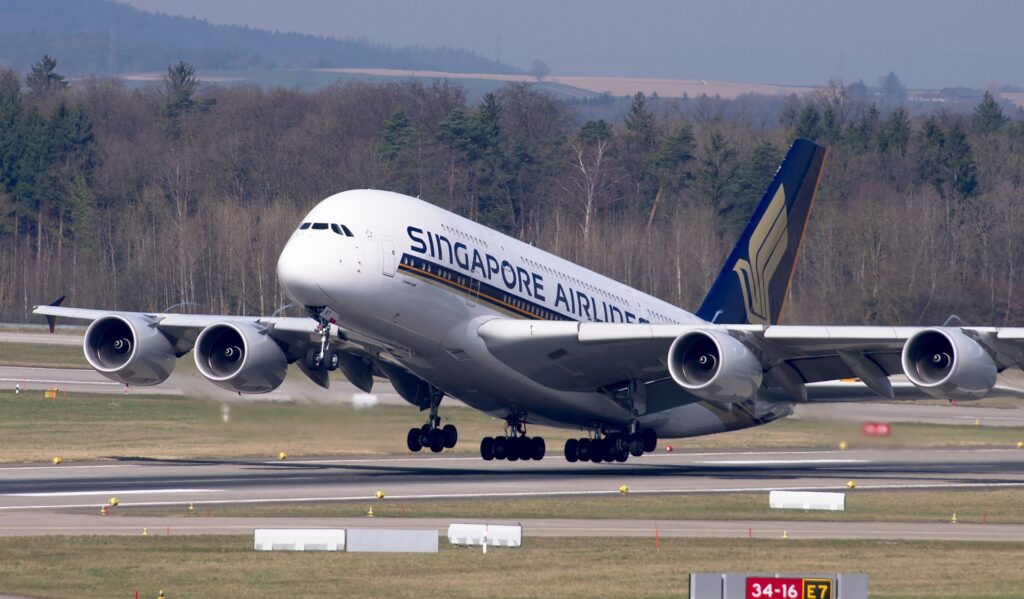
The Airbus A380 is famous for being the biggest passenger jet, but there’s a ton of weird stuff about it that never makes headlines.
Here are the “unknown facts” aviation geeks love:
1. The A380 was originally designed to be a smaller plane: When Airbus first started designing the A380 in the late 1990s, the plan was for it to be a 500-seat plane, rivaling the Boeing 777. However, market research indicated that airlines wanted a larger plane to reduce costs, so Airbus increased the capacity to around 800 passengers.
2. The Airbus A380 has a “water closet”: Due to its massive size, the A380 has a lavatory with a separate room for the toilet, shower, and sink – essentially a “water closet” like those found in business jets.
3. The A380’s wings are incredibly strong: The Airbus A380’s wings are designed to support 590 tonnes of weight, which is roughly equivalent to 148 elephants. They’re also flexible, with a wingtip deflection of up to 6 meters during flight.
4. The A380 uses a 21st-century version of a 19th-century technology: The A380’s main gear bogies use a system called “self-centering,” which helps steer the plane during takeoff and landing. This system is based on the 19th-century ” Ackermann steering” principle.
5. The A380’s engines are surprisingly efficient: The Airbus A380’s Engine Alliance GP7200 engines (used on some models) have a bypass ratio of 9:1, meaning that for every 1 unit of air that passes through the core, 9 units pass through the fan. This makes them extremely fuel-efficient.
6. The A380 has an air-purifying system: The A380 uses a HEPA (High Efficiency Particulate Air) filter system to purify the air inside the cabin. This system can remove 99.99% of airborne particles, including bacteria and viruses.
7. The A380’s upper deck was designed for comfort: The A380’s upper deck was designed to provide more comfort and space for passengers. The curved staircase leading to the upper deck is also designed to make the transition between decks smoother.
8. The A380 can fly with one engine inoperative: In the event of an engine failure, the A380 can still fly safely on three engines. This capability allows airlines to continue operating the plane to a nearby airport for repairs.
9. The A380’s fuselage is made from advanced materials: The A380’s fuselage is made from advanced materials like carbon fiber reinforced polymers (CFRP) and aluminum-lithium alloys. These materials provide exceptional strength-to-weight ratios.
10. The A380 has a relatively low noise level: Despite its massive size, the A380 is surprisingly quiet. Its noise level is comparable to that of the Boeing triple seven, which is significantly smaller. This is due to the A380’s advanced engine design and sound-absorbing materials.
The electronics and wiring system of the Airbus A380 is extremely complex. Here are some facts that give you an idea of its complexity:
1. It has Over 100,000 wires: The A380 has more than 100,000 wires, which is roughly 10 times more than the number of wires in a typical commercial airliner.
2. It has 500 km of cabling: The A380’s wiring system spans over 500 kilometers, which is equivalent to the distance between Paris and Lyon.
3. It is designed with over 100 computer systems: The A380 has over 100 computer systems, including flight control computers, navigation systems, and communication systems.
4. 15,000+ signals: The A380’s wiring system carries over 15,000 different signals, including power, data, and communication signals.
5. High-speed networks: The A380 uses high-speed networks, such as Ethernet and Fibre Channel, to transmit data between systems.
6. Redundancy and fail-safes: The A380’s electronics system has multiple redundancies and fail-safes to ensure continued safe operation in case of system failures.
The A380’s electronics system can be divided into several sub-systems, including:
1. Flight Control System (FCS): The FCS is a fly-by-wire system that controls the aircraft’s flight surfaces.
2. Avionics: The avionics system includes navigation, communication, and surveillance systems.
3. Electrical Power System (EPS): The EPS provides power to the aircraft’s systems.
4. Data Communication Network (DCN): The DCN is a high-speed network that connects the aircraft’s systems.
The complexity of the A380’s electronics and wiring system requires advanced testing and validation procedures to ensure that it operates safely and reliably.
Airbus used a model-based systems engineering (MBSE) approach to design and develop the A380’s electronics system. This approach involves creating a digital model of the system and simulating its behavior to validate its performance.
The A380’s electronics system is also designed to be highly serviceable, with features such as:
1. Line-replaceable units (LRUs): LRUs are modular components that can be easily replaced in case of failure.
2. Automatic testing: The A380’s systems can perform automatic tests to diagnose faults and identify required maintenance.
Overall, the electronics and wiring system of the A380 is a remarkable achievement in engineering and technology, enabling the safe and efficient operation of this complex aircraft.
The A380 is a large and heavy aircraft, and its size and weight impose certain limitations on where it can land. Here are some reasons why it’s not possible for the A380 to land on every airport:
1. Runway length: The A380 requires a minimum runway length of 2,900 meters (9,500 feet) for a normal landing, and 3,200 meters for an emergency landing. Many airports have runways that are too short for the A380 to land safely.
2. Runway width: The A380’s wingspan is 79.75 meters, which requires a wide runway to accommodate it. Some airports have narrow runways that are not suitable for the A380.
3. Airport infrastructure: The A380 requires specialized airport infrastructure, including a Stronger taxiways and aprons to support its weight, Wide taxiways and aprons to accommodate its wingspan, High-capacity fueling and ground handling equipment and Specialized maintenance facilities.
4. Gate and terminal infrastructure: The A380 requires large gates and terminals to accommodate its size. Some airports have gates and terminals that are too small for the A380.
5. Weight-bearing capacity: The A380 is a heavy aircraft, with a maximum takeoff weight of over 590 tonnes. Some airports have weight-bearing limitations on their runways, taxiways, and aprons that prevent the A380 from operating.
6. Approach and departure procedures: The A380 requires specific approach and departure procedures due to its size and performance characteristics. Some airports have approach and departure procedures that are not compatible with the A380.
Due to these limitations, only a relatively small number of airports worldwide are capable of handling the A380. These airports are typically major hubs with long runways, strong infrastructure, and specialized facilities.
Passenger opinions about flying on the Airbus A380 vary, but overall, many passengers enjoy flying on this aircraft. Here are some reasons why:
1. Spacious cabin: The A380 has a wider cabin than most other commercial aircraft, which makes it feel more spacious and comfortable.
2. Quiet ride: The A380 is known for its quiet ride, thanks to its advanced sound-absorbing materials and quieter engines.
3. Large windows: The A380 has large windows that provide plenty of natural light and stunning views.
4. Air pressure and humidity: The A380’s air pressure and humidity systems are designed to reduce jet lag and provide a more comfortable flying environment.
However, some passengers have expressed concerns about:
1. Upper deck seating: Some passengers find the upper deck seating to be cramped and less comfortable than other aircraft.
2. Limited airport access: The A380 is not compatible with all airports, which can limit passenger access to certain routes.
According to a survey by Skytrax, a leading airline rating and review website:
82% of passengers rated the A380 as “good” or “excellent”.
75% of passengers praised the A380’s comfort and spaciousness.
65% of passengers appreciated the A380’s quiet ride.
Overall, while opinions may vary, many passengers enjoy flying on the Airbus A380 due to its comfort, spaciousness, and quiet ride.