Why the F-22 Raptor Flies Supersonic Without Using Afterburners
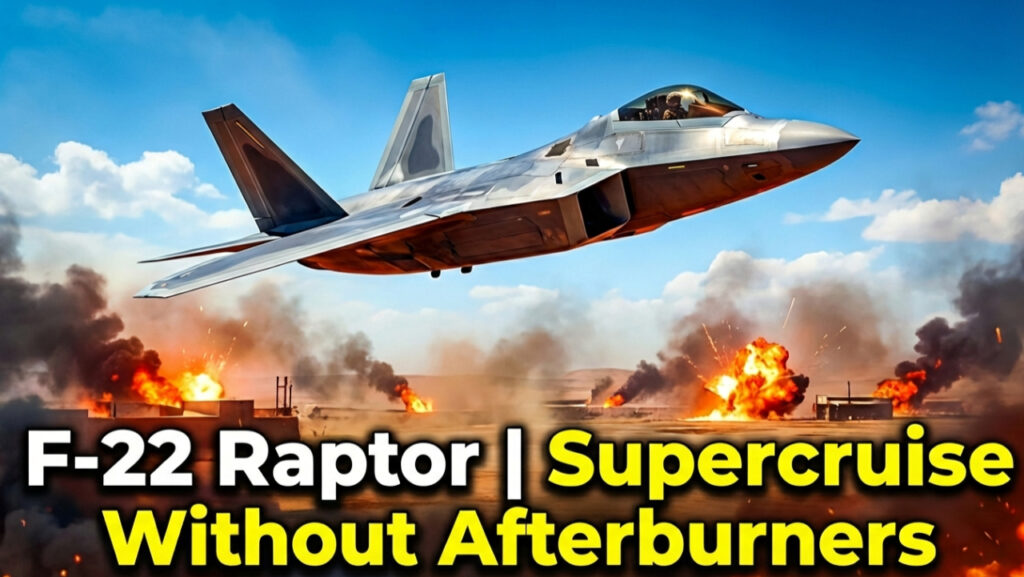
The F-22 Raptor is such a champ at supercruising without needing its afterburners. It’s really a combination of some seriously impressive engineering feats:
Raw Engine Power (F119-PW-100 Engines): The core of it all lies in its two Pratt & Whitney F119-PW-100 turbofan engines. These aren’t just any engines; they’re designed to produce an exceptionally high amount of “dry thrust,” which is the thrust generated without engaging the afterburner. Each engine can churn out around 26,000 pounds of dry thrust. This means they have enough power to push the F-22 past the sound barrier and keep it there, even without the extra kick from the afterburners. Most other fighter jets of its era couldn’t do this; they’d hit supersonic speeds only briefly with the afterburner engaged.
Exceptional Aerodynamic Design: The F-22’s shape is a masterclass in minimizing drag. Its sleek, stealth-optimized airframe is incredibly efficient at slicing through the air, especially at supersonic speeds. This includes things like:
Internal Weapons Bays: Unlike many other fighters that carry weapons externally, creating significant drag, the F-22 keeps its ordnance tucked away inside its fuselage. This maintains a smooth, aerodynamic profile.
Careful Shaping and Blending: Every part of the aircraft, from its wings to its fuselage, is meticulously shaped and blended to reduce resistance. The design aims to prevent shockwaves and turbulence that would otherwise slow the aircraft down.
Vectoring Nozzles for Thrust Optimization: The F119 engines feature two-dimensional thrust vectoring nozzles. While primarily known for enhancing maneuverability, these nozzles also contribute to optimizing thrust direction, which can subtly aid in maintaining efficient supersonic flight.
Fuel Efficiency and Strategic Advantage: This is where supercruise really shines. Afterburners, while providing a massive burst of power, are incredibly fuel-hungry. They can burn fuel at rates that drastically reduce a jet’s combat range and endurance. By supercruising without them, the F-22 can:
Conserve Fuel: Fly at sustained supersonic speeds for much longer periods, extending its operational range and reducing the need for frequent refueling.
Maintain Stealth: Afterburners produce a huge infrared (heat) signature, making an aircraft easily detectable by enemy sensors. Flying supersonically without them means the F-22 can maintain a lower thermal signature, preserving its stealth advantage while operating at high speeds.
Faster Response and Engagement: The ability to cruise at Mach 1.5 (about 1.5 times the speed of sound) or even Mach 1.8 without afterburners allows the F-22 to rapidly reach combat zones, pursue or evade targets, and surprise adversaries with sustained high-speed maneuvers. This gives it a significant tactical edge in air superiority missions.
In essence, the F-22 was designed from the ground up to overcome the limitations of traditional supersonic flight. Its powerful engines and low-drag design allow it to achieve and maintain high supersonic speeds efficiently, without the fuel penalties and stealth compromises associated with afterburner use.
Here are some fighter jets that can supercruise without using afterburners, apart from the F-22 Raptor:
Sukhoi Su-57 Felon Russia’s fifth-generation fighter jet is equipped with Saturn/Lyulka 117S turbofan engines and is capable of sustaining Mach 1.3 without afterburners.
Eurofighter Typhoon This European multirole fighter, powered by two Eurojet EJ200 engines, can supercruise faster than Mach 1, with some reports indicating speeds up to Mach 1.5 with an air superiority missile load.
Dassault Rafale France’s multirole fighter jet, with its Snecma M88 engines, can maintain a cruising speed faster than Mach 1, achieving around Mach 1.4 at high altitude in an air-to-air configuration.
Saab JAS-39E Gripen The Gripen NG, with its General Electric F414G engine, is designed for supercruise and has achieved Mach 1.1 with an air-to-air missile load.
Chengdu J-20 Mighty Dragon China claims its J-20 has supercruise capabilities, especially with the indigenous WS-15 turbofan engines.
Boeing F-15EX Eagle II While older F-15 models could also supercruise in certain configurations, the F-15EX is noted to have supercruise capabilities, though this can decrease with external combat-relevant items.
English Electric Lightning This older British interceptor from the late 1950s was known to routinely supercruise under specific high-altitude, low-fuel conditions, staying above Mach 1 on dry power.
Fighter jets use afterburners for a significant thrust boost, which is crucial for achieving supersonic speeds, rapid acceleration, takeoff, and combat maneuvers like missile evasion or gaining an advantage in a dogfight. However, using afterburners comes with notable downsides, especially when considering sustained supersonic flight.
Here are some of the Pros and Cons:
Pros of Afterburner Use:
Massive Thrust Boost Afterburners can increase thrust by 50% to over 200%, allowing for very rapid acceleration and quick attainment of supersonic speeds. This can be critical in combat for quick escapes or gaining a tactical advantage.
Rapid Maneuverability The increased thrust allows for high-G combat maneuvers and rapid vertical acceleration, which can be essential in a dogfight.
Short Takeoffs The powerful thrust makes short takeoffs possible, which is useful from smaller airfields or aircraft carriers.
Cons of Afterburner Use:
Extreme Fuel Consumption Afterburners are incredibly fuel-hungry, burning fuel at rates 3 to 10 times higher than normal cruise. A jet might deplete its fuel in minutes with continuous afterburner use, severely limiting range and endurance.
High Infrared Signature The bright, hot exhaust plume significantly increases the aircraft’s heat signature, making it easily detectable by enemy infrared sensors and more vulnerable to heat-seeking missiles. This compromises stealth.
Reduced Stealth Beyond the IR signature, the superheated exhaust plume can also produce detectable radar reflections, temporarily negating stealth advantages.
Heat Stress and Structural Damage Prolonged afterburner use generates extreme heat, which can cause structural damage, degrade stealth coatings, and increase maintenance requirements. Some aircraft have strict limits on continuous afterburner use to prevent this.
Noise Afterburners generate a tremendous amount of noise, making the aircraft easily detectable acoustically.
Supercruise vs. Afterburners:
Supercruise is the ability of an aircraft to maintain supersonic speeds without using afterburners. This is a key distinction and offers significant advantages over afterburner-dependent supersonic flight:
Fuel Efficiency and Endurance Supercruise allows for sustained supersonic flight with much lower fuel consumption, greatly extending the aircraft’s range and endurance.
Reduced Detectability By not using afterburners, supercruising aircraft maintain a lower infrared signature and radar cross-section, enhancing stealth and survivability.
Operational Flexibility Jets capable of supercruise can arrive in combat zones with more fuel, maintain supersonic patrol longer, and dictate the terms of engagement.
Only a few modern fighters, like the F-22 Raptor and some variants of the Eurofighter Typhoon and Dassault Rafale, truly have supercruise capability. Most other supersonic aircraft, including the F-35, rely on afterburners to break the sound barrier and sustain supersonic speeds, making supercruise a rare and highly advantageous feature.


Tony is a Aviation, Aerospace and Airplane Geek. He specializes in Aeronautics, Avionics, Military Air Assets, Airliners and Airlines


