How DC-10 Differs from L-1011 and the Aircraft they Inspired

The McDonnell Douglas DC-10 and the Lockheed L-1011 TriStar were the two primary rivals in the trijet market of the 1970s. While they look similar at a glance, they reflect very different design philosophies.
A Detailed Breakdown of the Differences Between DC-10 and L-1011 Aircraft
1. The Tail Engine Design (The Most Visible Difference): The most iconic difference lies in how the third (center) engine is integrated into the tail:
In the DC-10, the engine is mounted in a banjo fitting directly through the vertical stabilizer, which is the tail fin. This allows for a straight-through airflow, which is simpler to design and maintain, but it makes the center of gravity higher and requires a split rudder.
In the L-1011, The engine intake is located at the base of the tail fin, but the actual engine is housed inside the rear of the fuselage. The air travels through an S-shaped duct to reach the engine. This makes the aircraft more aerodynamic and keeps the center of gravity lower, but the duct was complex to manufacture.
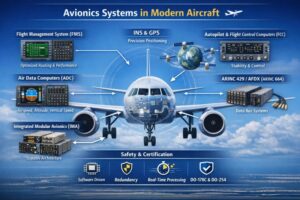
2. Avionics and Integrated Technology: The L-1011 is often cited as the most advanced airliner of its era, whereas the DC-10 was a more conventional evolution of existing technology.
The L-1011 featured a highly advanced Autoland system, CAT IIIb, which allowed it to land itself in zero-visibility fog, a rarity at the time. it also utilized a Flight Management System and Direct Lift Control, DLC, which used spoilers on the wings to help the plane stay on a precise glide slope during landing without changing the pitch of the nose.
On the other hand, the DC-10 relied on more traditional mechanical and hydraulic systems. While reliable in concept, the early DC-10 systems lacked the sophisticated backups found in the TriStar.
DC-10 Customers could choose between the General Electric CF6 or the Pratt & Whitney JT9D. This flexibility made the DC-10 popular with airlines that already had service contracts with those manufacturers.
The L-1011 was designed exclusively around the Rolls-Royce RB21. While the RB211 was a revolutionary, fuel-efficient triple-spool engine, Rolls-Royce’s bankruptcy during its development nearly killed the L-1011 project and delayed its entry into the market by a year, giving the DC-10 a critical head start.
The DC-10 early career was marred by several high-profile accidents, most notably involving a cargo door design that could fail under pressure. Though McDonnell Douglas eventually fixed these issues and the DC-10 became a very safe, reliable workhorse, its reputation suffered significantly in the 1970s.
The L-1011 had an excellent safety record. Its structural integrity was legendary (it was built like a tank), and its advanced automated systems assisted pilots in avoiding many common errors of that era.
Cabin and Passenger Experience: Both typically sat 250 to 300 passengers in a 2-5-2 or 3-4-2 configuration.
In the L-1011 Comfort, the TriStar was favored by passengers for its “SkyCafe” (a lower-lobe galley that sent food up via elevators) and its higher ceilings. It also featured unique glared-lighting and was generally quieter due to the S-duct insulating some engine noise.
Commercial Success and Variants: Here, the DC-10 is the Winner in Sales. 446 airframes were built. It was more successful because it offered long-range variants in the DC-10-30 and DC-10-40, much earlier than Lockheed did.
It also had a very successful second life as a dedicated freighter and a military tanker (the KC-10 Extender).
Only 250 airframes L-1011 were built. Because Lockheed was slow to produce a long-range version, the L-1011-500, they lost much of the international market to the DC-10. Lockheed eventually exited the commercial airliner business entirely after the TriStar.
While the era of the “tri-jet” has largely passed in favor of more efficient twin-engine aircraft, both the DC-10 and the L-1011 remain relevant today through their specialized roles and the profound technological legacy they left behind.
Current Operational Relevance of Both Aircraft
The DC-10 (and its MD-10 update) are used for firefighting. The DC-10 is currently one of the most important tools in aerial firefighting. The company, 10 Tanker Air Carrier, operates a fleet of converted DC-10s. Their massive size allows them to drop up to 12,000 gallons of retardant in a single pass, a capability few other aircraft can match.
The KC-10 Extender served as a backbone for the U.S. Air Force’s aerial refueling for decades. However, it is currently in the final stages of retirement slated for complete phase-out by late 2024 and early 2025, being replaced by the Boeing KC-46 Pegasus.
While FedEx retired the last of its MD-10s which were DC-10s upgraded with modern cockpits in early 2023, the aircraft proved for decades that wide-body tri-jets were ideal for heavy freight before the Boeing triple seven F took over the market.
The Lockheed L-1011 TriStar
The L-1011 is nearly extinct, but one very famous example remains active: the Stargazer. Operated by Northrop Grumman, it is used as a mobile launch platform for the Pegasus rocket, carrying satellites to high altitudes before releasing them into orbit.
Beyond the Stargazer, the L-1011 is no longer in commercial or military service. It exists primarily as a museum piece and a case study in advanced engineering.
These two aircraft were the bridge between the early jet age and the modern, highly automated era. They inspired the following generations in different ways:
The McDonnell Douglas MD-11, the most direct descendant of the DC-10 was the MD-11. It featured a stretched fuselage, winglets, and a two-man digital cockpit. While it suffered from falling short of its original range targets, it became a legendary cargo hauler that is still used by Western Global and FedEx today, though it is also nearing retirement.
The Boeing 777 and Airbus A330 were some other aircraft inspired by the L-1011.
The DC-10 and L-1011 were designed with three engines because, at the time, two engines were not considered reliable enough for long over-water flights due to ETOPS regulations.
The Boeing 777 was essentially the Tri-jet Killer. It was designed to carry the same passenger loads as the DC-10 and L-1011 but with only two engines, offering massive fuel savings.
The Airbus A330 also targeted the exact market niche (medium-to-long range wide-body) that the DC-10 and L-1011 once dominated.
Modern Avionics (The L-1011’s DNA)
The L-1011 was decades ahead of its time. It inspired the high level of automation found in modern Airbus and Boeing aircraft:
The TriStar’s ability to land in zero-visibility paved the way for the routine CAT III autoland systems used by every modern airliner today.
While not a pure fly-by-wire plane, its advanced flight control systems like Direct Lift Control influenced the philosophy of computerized flight protections found in modern Airbus A320 and A350 families.
The DC-10 survives today through brute force applications (firefighting and heavy lifting), while the L-1011 survives through its technological DNA, the automated systems and glass cockpit concepts that are now standard on every flight you take.


Tony is a Aviation, Aerospace and Airplane Geek. He specializes in Aeronautics, Avionics, Military Air Assets, Airliners and Airlines