What Happens When Lightning Strikes An Airplane Mid-Air
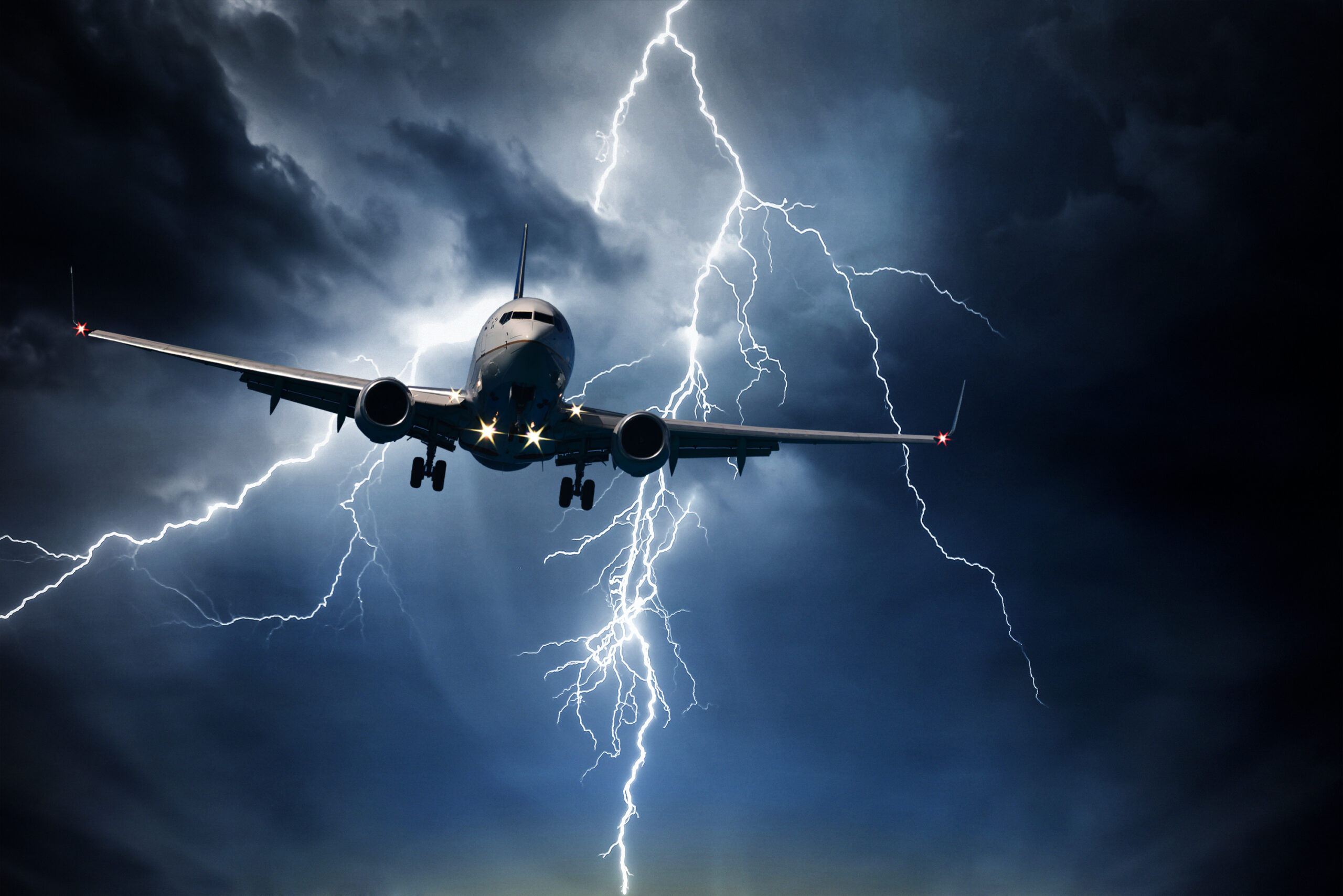
Passenger airplane travelling through sky against stormy bolt cloudscape
When lightning strikes an airplane, it can cause significant damage, but modern aircraft are designed to withstand such strikes. Here’s what typically happens:
1. A lightning bolt, which can be up to 10 kilometers long and contains millions of volts, hits the plane. The strike can occur on any part of the aircraft, including the nose, wing, or tail.
2. The extreme heat and energy from the lightning bolt can cause damage to the aircraft’s structure, including burn marks or holes in the skin of the plane, damage to the electrical systems, including avionics, navigation, and communication equipment and potential fires. Although modern aircraft have fire suppression systems.
3. The lightning bolt seeks the path of least resistance to ground. The aircraft’s metal skin provides a conductive path for the electricity to flow, which helps to protect the plane and its occupants.
4. The strike can cause a loud noise, similar to a loud clap of thunder, and potentially injure occupants due to the shockwave. However, the cabin is designed to be pressurized and protected, so the risk of injury or death is relatively low.
5. After a lightning strike, the pilots will typically declare an emergency and notify Air Traffic Control, Conduct a visual inspection of the aircraft for damage and perform a series of checks to ensure the aircraft’s systems are functioning properly.
To mitigate the risks associated with lightning strikes, aircraft are designed with lightning protection in mind such as surge arresters to protect electrical systems. Lightning rods or air terminals are also fitted in aircraft to attract the strike and direct it harmlessly to the ground. Lightning-strike-resistant materials are also used in producing the aircraft’s skin and structure to counter the actions and effects of lightning.
Airlines perform regular inspections and maintenance to ensure the aircraft’s lightning protection systems are functioning correctly.
Pilots and air traffic controllers work together to avoid areas with known lightning activity.
While lightning strikes are a concern for aircraft, the chances of being struck are relatively low. According to the Federal Aviation Administration, the odds of a commercial airliner being struck by lightning are about 1 in 1 million.